Moment Energy
Creating a more mature and customer-focused digital experience for the company’s BESS products.
Role
UX/UI Designer
Industry
Clean Tech
Duration
3 months
Driving Measurable Growth Across Key Metrics
+110%
+12%
+20%
The Problem
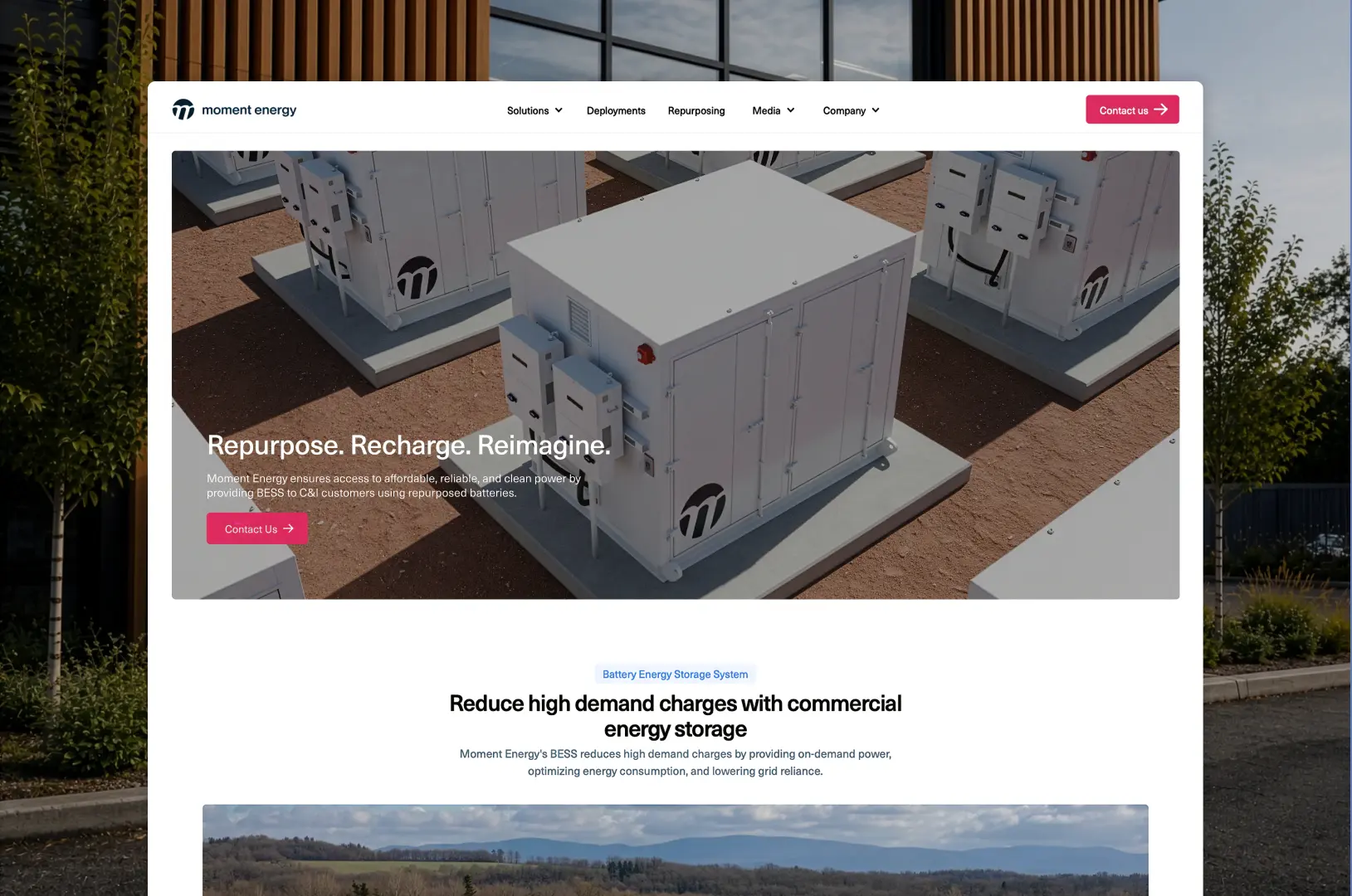
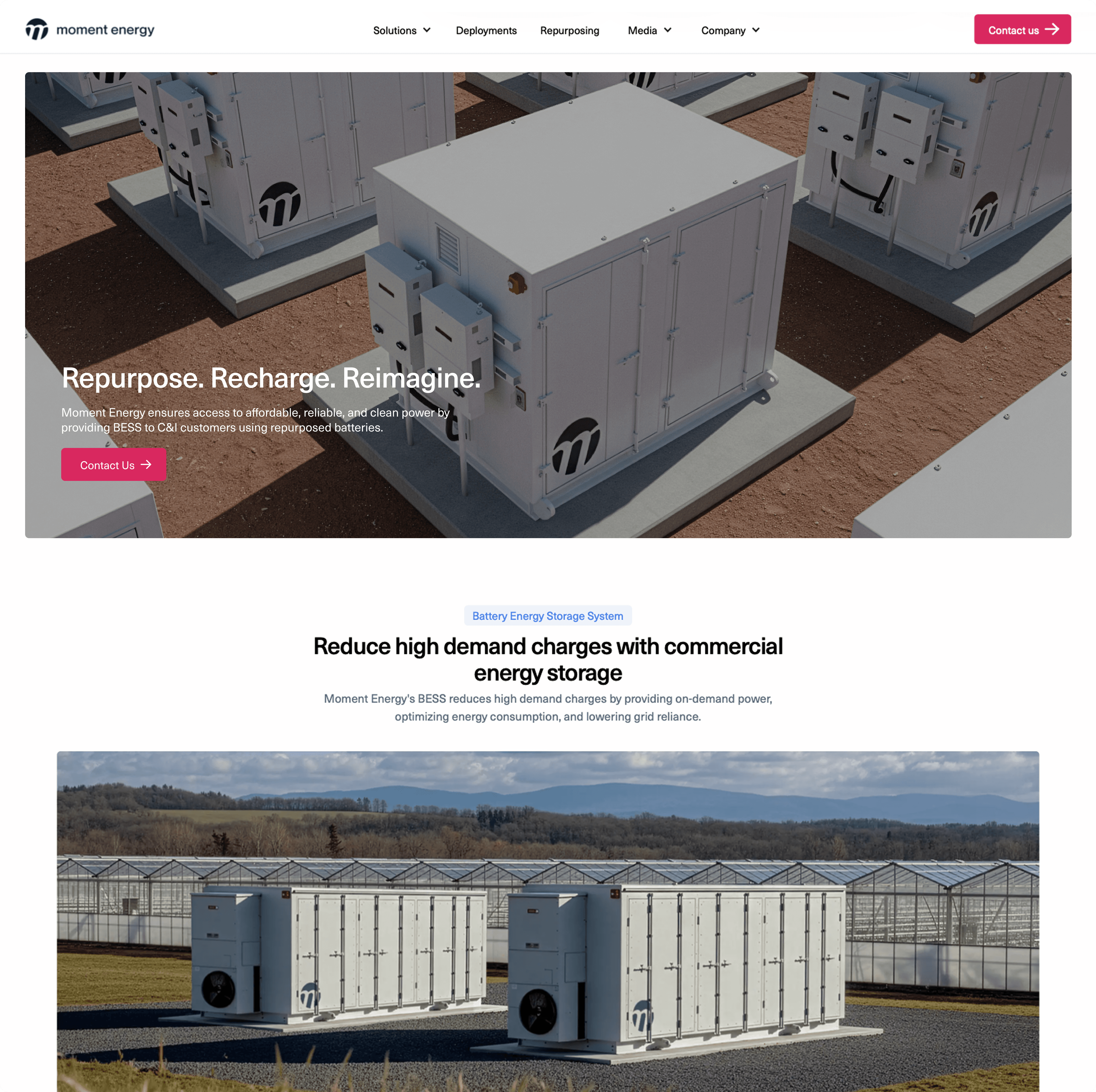
Moment Energy had a credible product and strong technical foundations, but the website wasn't doing them justice. It lacked clear branding, a focused user journey, and convincing product storytelling. Fragmented forms, mixed messaging, and an overemphasis on investor content created friction for the buyers who mattered most.
The underlying issue: the site was trying to speak to everyone including investors, customers, suppliers, and job applicants all at once. That dilution made it compelling to no one. Enterprise buyers landing on the site couldn't quickly understand what Moment Energy offered, who it was for, or why they should trust it enough to start a conversation.
My Role
As the sole Product Designer, I owned the redesign end to end, from discovery through delivery. This meant running the research process, restructuring the site's information architecture, building a cohesive visual brand system, and designing every page and interaction. Every decision was mine to make and defend.
The Outcome
The redesigned site launched within 2–3 months and delivered measurable results across every tracked metric. MQLs doubled, conversion rate improved by 5.1 percentage points, and session duration grew by 20%, indicating that buyers were engaging deeply with the content, not bouncing.
Beyond the numbers, the redesign gave Moment Energy a digital presence that matched the maturity of their product: a foundation built for growth, not just a placeholder for a company still finding its footing.
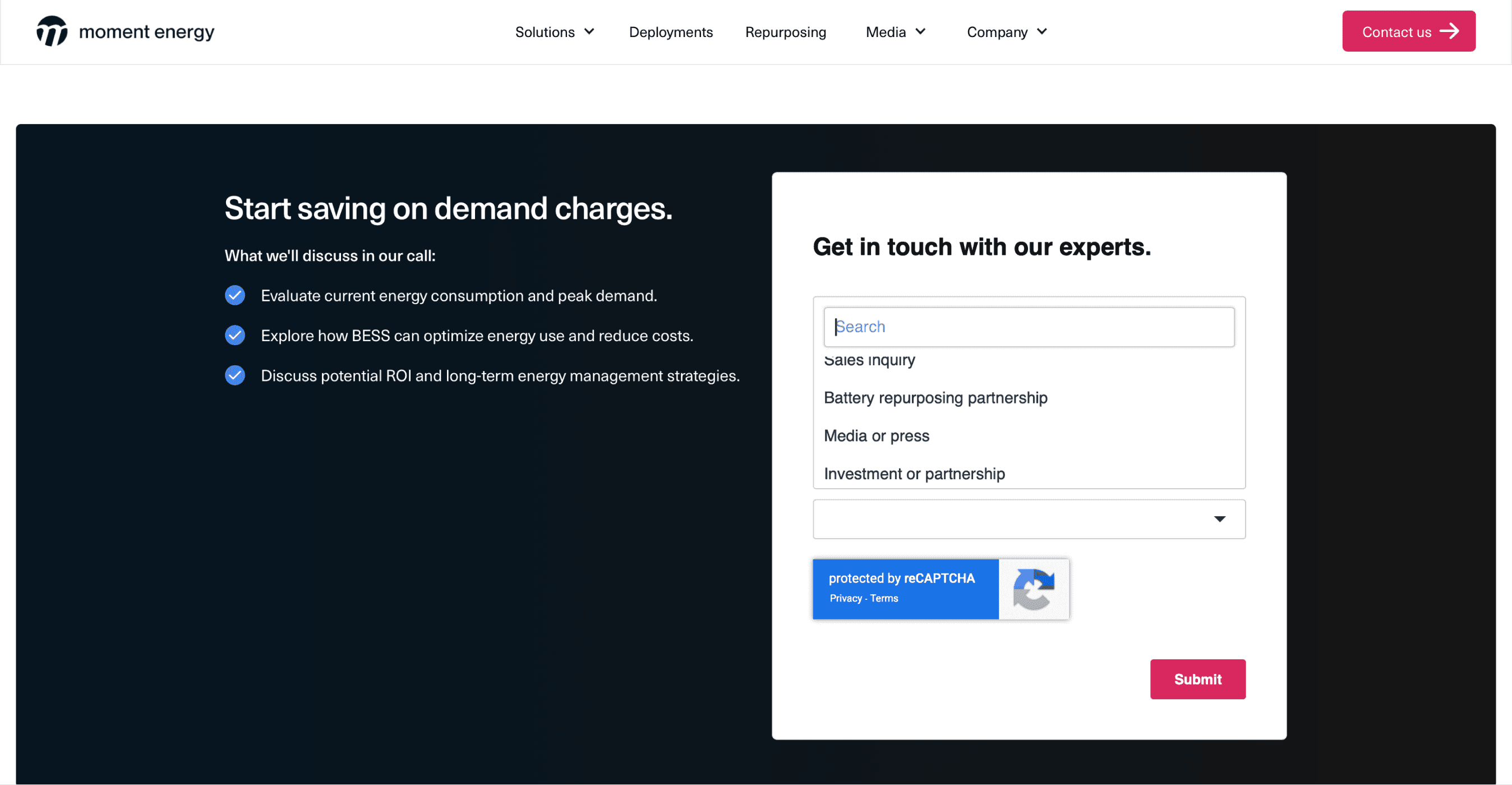
Unified Form Experience
Consolidated multiple forms into a single dynamic form that adapts fields based on inquiry type, simplifying the user journey and improving backend organization.
Reflection
This project deepened my understanding of the B2B funnel and what it takes to support the sale of multi-million dollar infrastructure products. Unlike consumer products, BESS purchases involve multiple stakeholders, long evaluation cycles, and a need for credibility at every touchpoint. I learned that early-stage messaging has to clearly communicate technical value, reliability, and real-world applicability, not to convince, but to give buyers the confidence to justify deeper engagement internally.
The most important design decision on this project was also a strategic one: narrowing focus to a single primary persona. Designing for everyone had made the site useful to no one. Once the experience was anchored to the core customer's journey, everything else like the the hierarchy, the tone, the calls to action became clearer and more intentional.
This project reinforced a principle I now carry into every B2B engagement: narrowing focus early almost always produces a more scalable, more persuasive experience overall. Strong product storytelling, structured IA, and streamlined flows aren't just craft decisions — they're what make complex buying decisions feel manageable.